New equipment ships R-32 and R-454B. R-410A keeps running.
R-410A is not banned. Under the EPA Technology Transitions rule (AIM Act of 2020), new residential and light commercial AC and heat pumps manufactured on or after January 1, 2025 must use a refrigerant below 700 GWP, so new equipment now ships A2L (R-32 or R-454B). Existing R-410A systems stay legal to operate and service. Pre-2025 R-410A units can still be installed federally, but New York is the exception: NYSDEC Part 494 keeps the January 1, 2026 install ban in force (Greenberg Traurig), so a new R-410A install is not permitted in NYC. NYC also adopted ASHRAE 15-2022 and UL 60335-2-40 by reference, requiring a refrigerant detection sensor on A2L installs. This page is a factual reference, sourced to EPA, DOE, and NYSDEC, for NYC owners planning the transition.
Is my R-410A system illegal now?
No. R-410A is a refrigerant, not a banned substance. The 2025 change restricts what manufacturers can put in new equipment. It does nothing to the system already on your roof or in your closet. Here is exactly what you can and cannot do, with the EPA rule behind each answer. What NYC owners are asking about the R-410A phase-out answers the questions owners actually call about.
- 01
Can I keep running it? Yes.
EPA is explicit: there are no requirements to stop using any equipment currently in use. Owners can run and repair a legacy R-410A system through its full useful life. EPA HFC phasedown FAQ.
- 02
Can I still get it serviced? Yes.
The AIM Act caps how much new HFC refrigerant is produced each year; it does not ban servicing existing systems. R-410A stays available for recharge and repair. Supply shrinks on a published schedule, so price climbs over time, but service is legal and available. EPA HFC allowance allocation. In Vinco's experience, R-410A is already on the same curve R-22 was in 2018 to 2020: post-restriction prices climbing and replacement parts getting harder to source.
- 03
Can I still buy a new R-410A unit? Federally yes, but not in NYC.
New residential and light commercial AC and heat pumps manufactured on or after January 1, 2025 must be under 700 GWP, so factories ship A2L now. Federally, equipment made or imported before that date can still be installed: EPA's May 2026 Reconsideration Rule (effective July 27, 2026) removed the installation deadline on that pre-2025 inventory. New York did not follow. NYSDEC Part 494 is an independent state rule that keeps the January 1, 2026 prohibition on installing new R-410A residential and light commercial equipment in force, so a new R-410A install is not permitted in NYC regardless of the federal rollback (Greenberg Traurig).
- 04
When must I switch? Never by mandate.
No federal rule, and no NYC DOB or FDNY rule, forces replacement of a working R-410A system. The forcing function is money, not law: as HFC production steps down, R-410A recharge and R-410A compressors get more expensive, so at end of life the A2L replacement becomes the better spend. Vinco flags that math on the diagnostic instead of pushing an early replacement.
How the New York install ban is enforced today.
The New York rule is not just on the books. Here is how NYSDEC is enforcing it right now, and the court challenge that so far has not changed it.
NYSDEC Part 494's prohibition on installing new R-410A residential and light commercial equipment took effect January 1, 2026 and remains in force. NYSDEC has published several enforcement-discretion letters since 2025, but each is a narrow, conditional carve-out, not a reopening of R-410A installs. The June 29, 2026 letter states that all provisions of Part 494 remain in effect and will be enforced, then extends the prohibition date to January 1, 2028 for certain field-charged systems (VRF and remote condensing units) whose installers already qualified for an exemption or DEC variance and were delayed by construction beyond their reasonable control. An April 1, 2026 letter lets small businesses in disadvantaged communities install remote condensing units below 1400 GWP through 2027, a ceiling that still excludes R-410A, which the AIM Act rates at roughly 2,088 GWP on its AR4 regulatory basis. The remaining relief covers separate questions: automatic leak-detection systems and outdoor components, pending force-majeure variances, and bulk sales of R-404A and R-507A service refrigerant, the last now continued by court order rather than by letter. None of it involves new R-410A equipment installs. For a NYC building owner or contractor the practical result is unchanged: outside those narrow conditions, a new R-410A install is not permitted.
Part 494 has also been challenged in court, and the install rule has held. In 2025 two industry associations, AHRI and HARDI, sued NYSDEC in New York State Supreme Court, Albany County (Index No. 903624-25), arguing the amended rule was arbitrary and exceeded the agency's authority. The court dismissed that challenge on December 22, 2025 and left Part 494 in force. The associations appealed to the New York Appellate Division, Third Department, where the case is pending as of mid-2026. On May 4, 2026 that court granted a preliminary injunction pending appeal, but it is expressly limited to the rule's prohibition on bulk sales of R-404A and R-507A service refrigerant. The R-410A install prohibition is untouched and stays enforceable while the appeal runs. We track this because a court ruling or a further NYSDEC action is what would loosen the New York install rule, and neither has happened for R-410A installs today. (This is a New York State proceeding. The unrelated federal case sometimes cited in this context, Mulhern Gas Co. v. Mosley, concerns New York's gas-appliance rules for new buildings, not refrigerants.)
What about R-22?
R-22 is an HCFC (hydrochlorofluorocarbon), not a CFC. It is an ozone-depleting substance, so it was phased out under the ozone program, a different law than the one covering R-410A. Clean Air Act §605 ended new R-22 equipment in 2010 and banned all production and import of virgin R-22 on January 1, 2020.
Servicing an existing R-22 system is still legal. EPA does not require homeowners to replace R-22 equipment; you can keep running it as long as it holds a charge. EPA homeowner FAQ. The catch is supply: since 2020 there is no new R-22, so a recharge draws from reclaimed and pre-2020 stock.
In Vinco's experience, R-22 refrigerant and parts today run 3 to 5 times pre-ban pricing. Reclaimed stock, compressors, and factory-matched components are all trending harder to source, which is why a big R-22 leak usually tips an aging system into replace-not-repair.
An R-22 system cannot be converted to R-410A or A2L. Different pressures, different oils, different components. When an R-22 unit reaches end of life, it is replaced with new A2L equipment, not retrofitted.
If you run a legacy R-22 or R-410A system: secure or back-stock the critical parts. For portfolios and contract-holders especially, get spares in-house before the market tightens further. Compressors, TXVs, condenser coils, and refrigerant charge, the parts you need at 2am on a July night, are the ones getting hardest to find.
The federal refrigerant phase-down schedule.
Two levers, one law. The AIM Act phases down HFC production on a fixed schedule through 2036 (the percentages below), and the 2023 Technology Transitions rule separately restricts high-GWP refrigerant in new equipment. Neither bans an installed system. Figures below are the EPA allowance allocation steps.
- 01
January 1, 2022. HFC production cap to 90 percent of baseline
First step under the AIM Act. R-410A still in production but allocation shrinks.
- 02
January 1, 2024. Production cap to 60 percent of baseline
Major step down. Manufacturer R-410A inventories drawn down through 2024 ahead of the January 2025 manufacture transition to A2L.
- 03
January 1, 2025. New AC and heat pumps must be under 700 GWP
This is a manufacture restriction under the Technology Transitions rule, not an install ban and not a service ban. New residential and light commercial equipment ships A2L (R-32 for Daikin/LG, R-454B for Carrier/Trane/Mitsubishi). R-410A (2,088 GWP on the AIM Act's AR4 basis) is over the limit, so new units stopped shipping with it.
- 04
May 26, 2026. EPA removes the federal R-410A install deadline (New York keeps it)
The Technology Transitions Reconsideration Rule (Federal Register 2026-10387, effective July 27, 2026) lets residential and light commercial R-410A equipment manufactured or imported before January 1, 2025 be installed with no federal deadline. A 2023 interim rule had capped that at January 1, 2026; the reconsideration removed the federal cap for that pre-2025 inventory. This relief does not reach New York: NYSDEC Part 494 is an independent state rule that keeps the January 1, 2026 install prohibition in force, so a new R-410A install is not permitted in NYC.
- 05
January 1, 2029. Production cap to 30 percent of baseline
R-410A service refrigerant supply continues to shrink. Replacement parts for older systems may take longer to source.
- 06
January 1, 2034. Production cap to 20 percent of baseline
Most R-410A equipment installed before 2025 reaches end of life around this window. R-410A service refrigerant becomes expensive enough that replacement with A2L is the economic choice on any failure.
- 07
January 1, 2036. Production cap to 15 percent of baseline
Final step under the AIM Act. R-410A becomes a niche legacy service refrigerant.
ASHRAE 15-2022 and UL 60335-2-40 adopted by reference.
NYC adopted ASHRAE Standard 15-2022 (Safety Standard for Refrigeration Systems) and UL 60335-2-40 (Safety Standard for Refrigerating Appliances) by reference in the NYC Mechanical Code. The standards set charge limits per occupied zone, refrigerant detection sensor requirements, and mechanical room ventilation thresholds for A2L systems. The detection sensors are mandatory on A2L installs and tied into the indoor unit control board to shut off the compressor and ventilate the zone if a leak is detected.
NYC DOB permit filings for new HVAC installs after January 1, 2025 must include refrigerant type (R-32 or R-454B), total system charge, charge per zone, and detection sensor make and model. The permit reviewer cross-checks the equipment data sheet against the building's occupied volume. Vinco files all required A2L documentation as part of the standard install permit.
Three actions, no panic.
Operating R-410A is still legal. The transition is gradual. The right move is planning, not emergency replacement.
- 01
Keep operating existing R-410A normally
Do not retrofit. Do not replace R-410A early just because of the phase-out. Existing equipment can run to end of life. Service is available; parts will be available for several years.
- 02
Maintain refrigerant logs
EPA Section 608 requires logged refrigerant additions, recoveries, and equipment changes on any system over 50 lbs charge. Retain records 3 years on-site (longer for NYC DOH commercial refrigeration). The logs prove ongoing compliance and document the R-410A → A2L transition when it happens.
- 03
Plan replacement, not retrofit
When an R-410A system reaches end of life, replace it with A2L equipment. Piping may be reusable after a thorough cleanout, but compressors, expansion valves, and indoor coils are not interchangeable. For commercial owners under Local Law 97, pull capital replacement into the 2026 to 2028 window where Con Edison Clean Heat rebates apply on the heat pump conversion. The federal 25C and 25D credits expired at the end of 2025.
- 04
Use the transition to plan electrification
An R-410A central air system reaching end of life is also the cleanest opportunity to convert to a heat pump. The Con Edison Clean Heat rebate ($8,000 base, $10,000 in a Disadvantaged Community, on a residential single-family full replacement) plus the natural replacement cost makes electrification the cheapest LL97 compliance path on the table. The federal 25C and 25D credits that used to add to this expired at the end of 2025.
Every refrigerant generation traded one problem for another. A2L is the current answer.
Read the matrix top to bottom. CFCs (R-11, R-12) destroyed the ozone layer and were banned. R-22 cut the ozone damage but not enough, so it was phased out. R-410A fixed ozone entirely, then turned out to be a potent greenhouse gas, so it is being restricted. A2L (R-32, R-454B) holds ozone at zero, cuts the warming number three to four times, and accepts one trade-off: mild flammability. Toxicity stays low the whole way across.
| Refrigerant | Ozone (ODP) | Warming (GWP) | Flammability | Toxicity |
|---|---|---|---|---|
| R-11CFC · Banned | 1.0 | 6,230 | 1No flame | ALow |
| R-12CFC · Banned | 1.0 | 12,500 | 1No flame | ALow |
| R-22HCFC · Phased out | 0.055 | 1,960 | 1No flame | ALow |
| R-410AHFC · Restricted | 0 | 2,256 | 1No flame | ALow |
| R-32HFC · Current A2L | 0 | 771 | 2LMild | ALow |
| R-454BHFC/HFO · Current A2L | 0 | 531 | 2LMild | ALow |
GWP-100 values per IPCC AR6 (2021), Working Group I, Chapter 7 (Table 7.SM.7). Blend values (R-410A, R-454B) are component-weighted from AR6 constituent GWPs. ODP per EPA 40 CFR Part 82; safety classes per ASHRAE Standard 34. The EPA AIM Act sets its regulatory GWP caps (like the 700 limit) on the older IPCC AR4 basis, so the legal thresholds in the timeline and code sections above use AR4 values (R-410A = 2,088): EPA Technology Transitions GWP reference table. Regulatory background: Sabin Center for Climate Change Law (Columbia). Lower is better on every column except toxicity, where all six share the A-class floor.
The class is a letter plus a number, like A1 or A2L. They mean two different things.
- Letter (A or B) is toxicity. A means lower toxicity, an occupational exposure limit at or above 400 ppm. B means higher toxicity, below 400 ppm.
- Number (1, 2L, 2, 3) is flammability. 1 = no flame propagation, 2L = mildly flammable with a low burning velocity (under 10 cm/s), 2 = flammable, 3 = highly flammable. Propane and natural gas are class 3.
Every refrigerant Vinco touches is A-class, the lowest-toxicity group. The move from R-410A (A1) to R-32 and R-454B (A2L) changes only the flammability number to mildly flammable. The toxicity letter does not change.
Every refrigerant Vinco has worked with is A-class toxicity. The A2L designation adds mild flammability, nothing more. Installing it to code requires EPA Section 608 certification plus manufacturer A2L training and a refrigerant leak-detection sensor. Vinco's field team is trained on both the R-32 and R-454B platforms.
R-22, R-410A, R-454B, R-32 side by side.
The four refrigerants any NYC owner needs to recognize. R-22 production ended in 2020. R-410A is not banned, but new equipment now ships A2L. R-454B and R-32 are those A2L refrigerants.
| Property | R-22 | R-410A | R-454B | R-32 |
|---|---|---|---|---|
| Status | Production/import banned Jan 1, 2020 (CAA §605); existing systems still serviceable with reclaimed stock | Not banned. New equipment must be under 700 GWP since Jan 1, 2025; existing systems run and service normally | Current standard A2L | Current standard A2L |
| Type | HCFC (chlorine-bearing) | HFC blend (R-32 + R-125) | HFO blend (R-32 + R-1234yf) | Pure HFC (single component) |
| GWP (100-year, AR6) | 1,960 | 2,256 | 531 | 771 |
| ODP (ozone depletion) | 0.055 (depletes ozone) | 0 | 0 | 0 |
| ASHRAE flammability class | A1 (non-flammable) | A1 (non-flammable) | A2L (mildly flammable, low burn velocity) | A2L (mildly flammable, low burn velocity) |
| Manufacturer adoption | None (legacy only) | Legacy installed base (2005-2024) | Mitsubishi, Carrier, Trane, Lennox, York | Daikin, LG, Goodman, Fujitsu (most multi-splits) |
| NYC code status | Service only; no new installs | Service + existing systems only | Permitted; ASHRAE 15-2022 + UL 60335-2-40 sensor required | Permitted; ASHRAE 15-2022 + UL 60335-2-40 sensor required |
| Typical retrofit path | Full equipment replacement (no drop-in) | Replace at end of life with A2L equipment | New install; pipe cleanout if reusing R-410A line set | New install; pipe cleanout if reusing R-410A line set |
GWP-100 figures per IPCC AR6 (2021); blend values (R-410A, R-454B) are component-weighted from AR6 constituents. ASHRAE classes per ASHRAE 34. R-22 status per EPA Class II phaseout; R-410A status per the EPA Technology Transitions rule. Lower GWP is better. ODP 0 means no ozone depletion.
Why Mitsubishi chose R-454B, Daikin chose R-32.
Both refrigerants are A2L. Both meet EPA AIM Act caps. The brand split comes down to GWP positioning, capacity tradeoffs, and the parts supply chain each manufacturer already built.
Mitsubishi, Carrier, Trane, Lennox, York
- GWP 531 (IPCC AR6; 466 on the AR4 basis regulators use). Lowest of the mainstream A2L pair, positioning the brand for tighter future GWP caps.
- Blend (R-32 + R-1234yf). Glide of about 1.4°F. Charge management on service is tighter than a single-component refrigerant.
- Capacity. Slightly lower volumetric cooling capacity than R-32; offset by larger compressors at the same tonnage rating.
- Service complexity. Cannot top off with vapor only; technicians charge liquid through a digital scale. Vinco techs train on this annually.
Daikin, LG, Goodman, Fujitsu (most multi-splits)
- GWP 771 (IPCC AR6; 675 on the AR4 basis the 700 GWP cap uses, so R-32 equipment qualifies). Higher than R-454B, far below R-410A.
- Single component. Zero glide. Simpler service: top off with vapor, no liquid-only charging.
- Capacity. ~5-10% higher volumetric cooling capacity than R-454B; smaller equipment per ton, slightly lower install footprint.
- Field service. The simpler charging procedure means less training pressure on field techs. Daikin has standardized R-32 across its full residential and light commercial line.
NYC bottom line: day-to-day performance, electrical draw, and operating cost are functionally identical between the two. The decision usually comes down to which manufacturer platform fits the building (City Multi vs VRV for commercial; existing Mitsubishi or Daikin service relationships for residential) and which contractor you trust to install it.
The 15-25% A2L premium, what it actually means.
A2L equipment costs 15 to 25 percent more than the R-410A equivalent did in 2024. The premium varies by system class.
- 01
Single-zone mini-split: ~15% premium
One refrigerant detection sensor, one zone, simpler controls update. Smallest install premium. A wall-mount that was $4,500 in 2024 is $5,000 to $5,500 today.
- 02
Multi-zone mini-split: ~18-22% premium
One sensor per indoor head, plus the outdoor unit's updated electronics. Premium scales with zone count. A 3-zone install that ran $11,500 in 2024 is $13,500 to $14,500 today.
- 03
Commercial VRF / VRV: ~20-25% premium
Sensors on every indoor unit, updated branch controllers, refrigerant leak detection tied into the building management system. Premium highest because of system complexity, not refrigerant cost. A $80,000 VRF install runs $96,000 to $100,000 on A2L today.
- 04
Con Edison Clean Heat still applies
Con Edison Clean Heat ($8,000 base, $10,000 in a Disadvantaged Community, on a residential single-family full replacement) and NYSERDA rebates apply equally to A2L installs. On a heat pump conversion, the rebate can cover most or all of the A2L cost uplift. The federal 25C and 25D tax credits expired December 31, 2025 and no longer apply.
- 05
Premium narrows through 2026-2027
A2L equipment supply tightened in 2024-2025 as manufacturers rolled out new platforms. As production scales, the premium will compress to roughly 8-12% by 2027 and disappear by 2030, when A2L is the only option.
Live A2L installs, documented.
The refrigerant transition is not theoretical for Vinco. Current-generation A2L equipment is already installed, commissioned, and documented on Vinco jobs across the city.
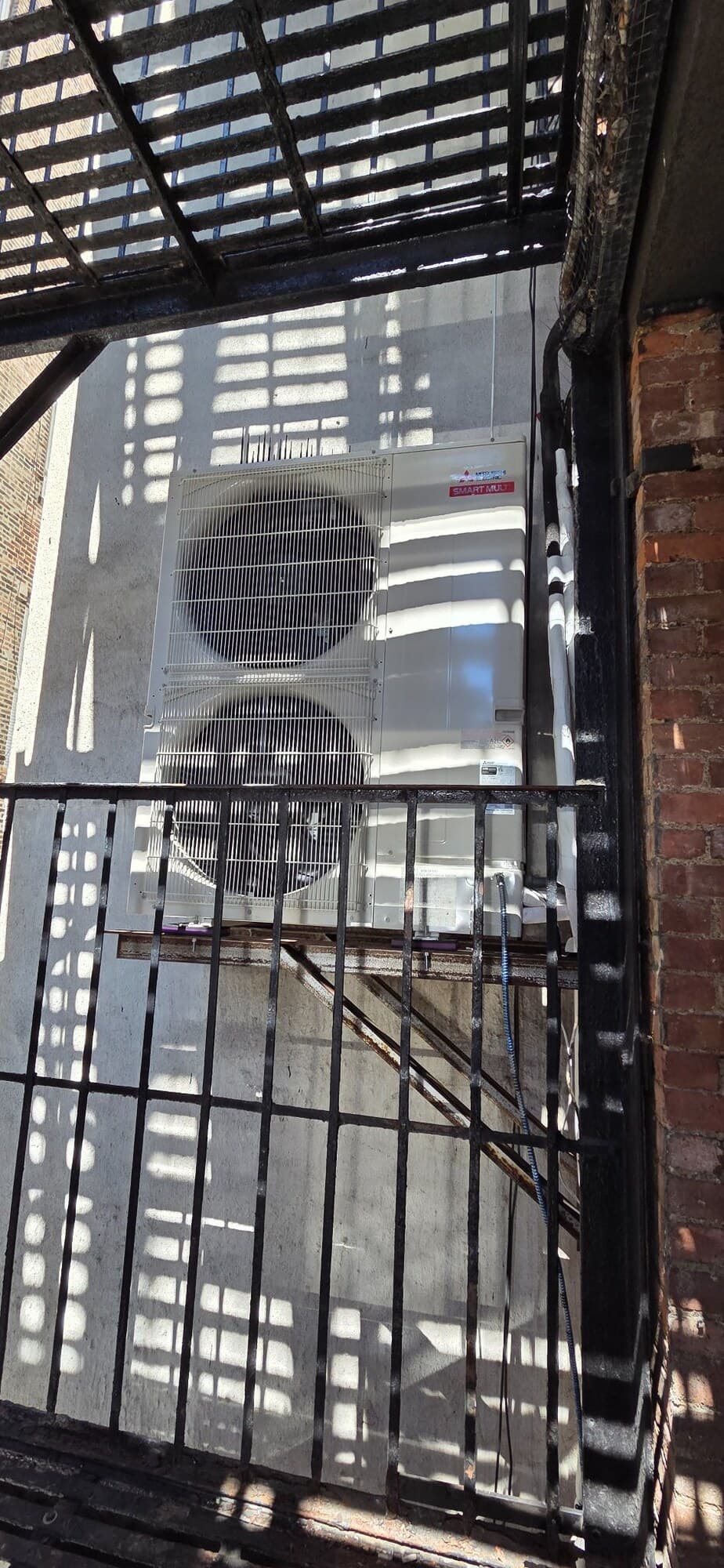
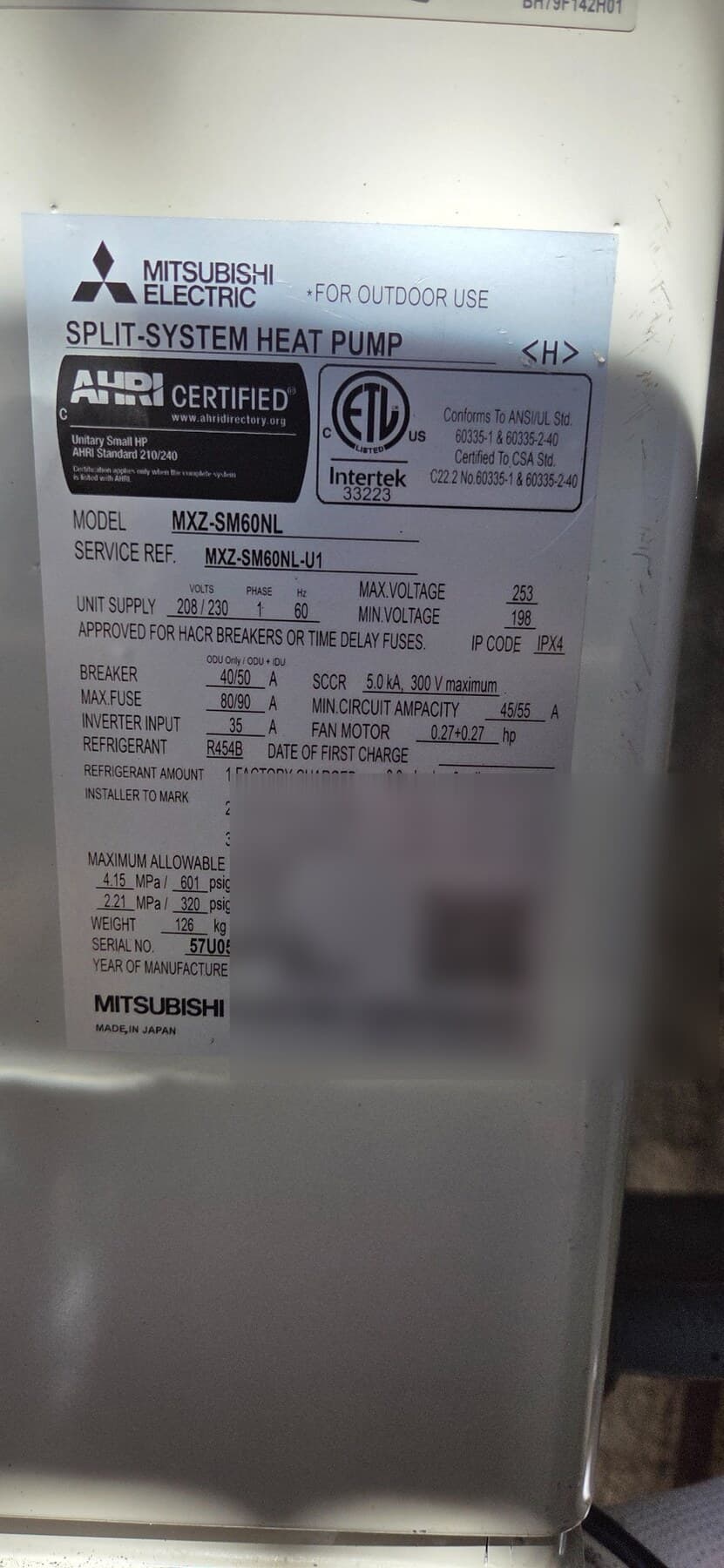
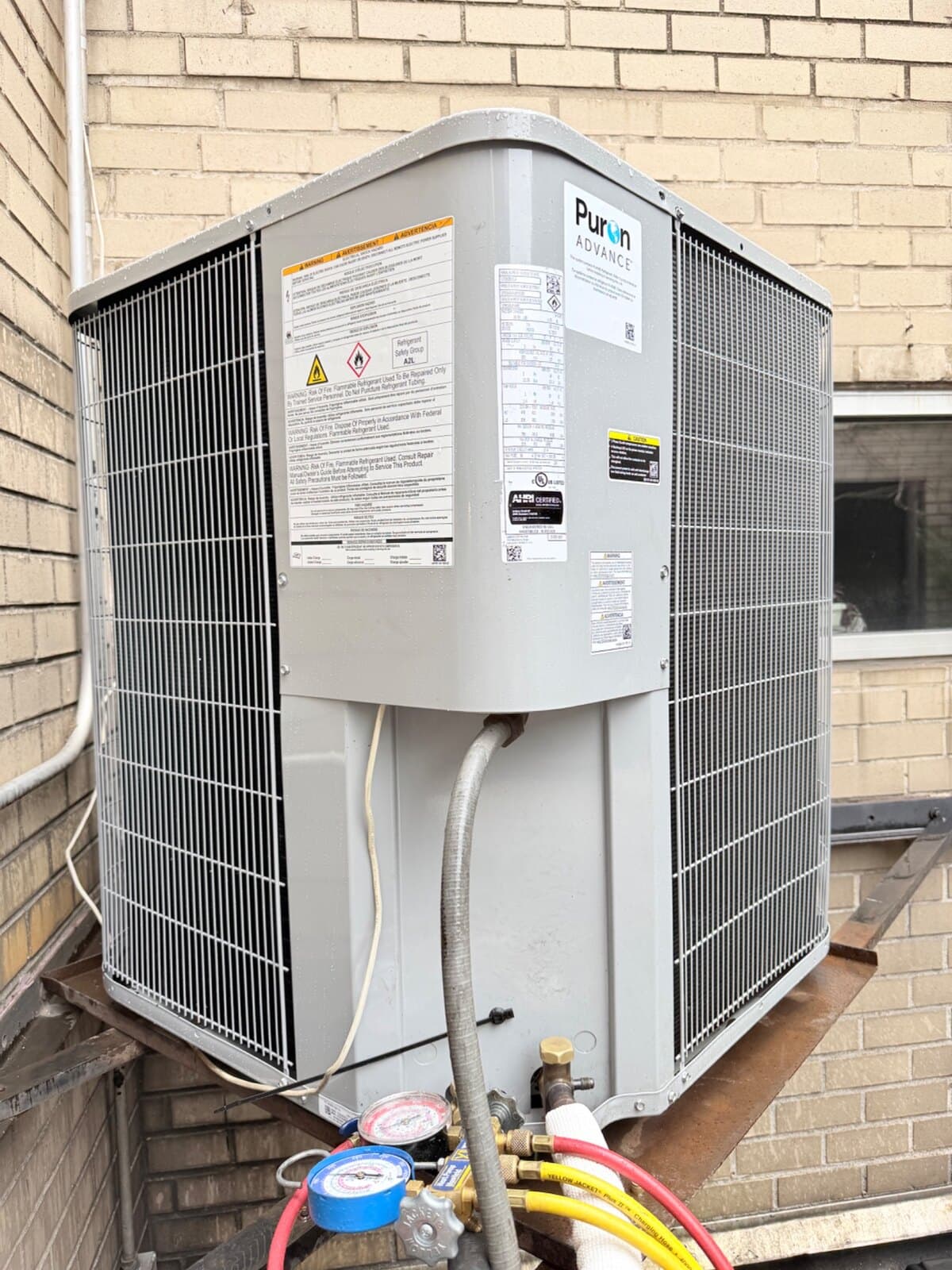
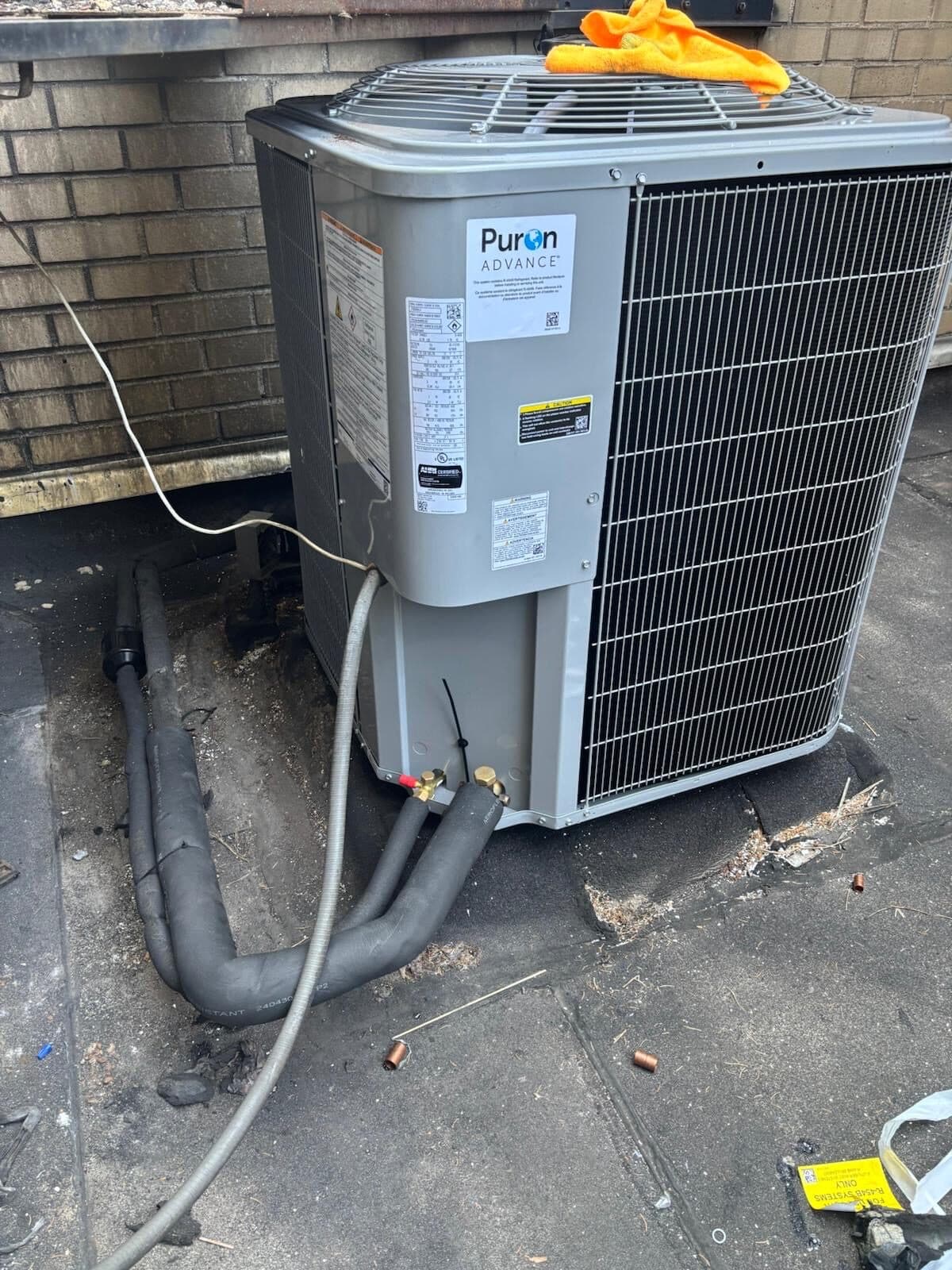
With the Daikin R-32 rooftop unit on the homepage hero, the documented set spans the three major manufacturers and both dominant A2L refrigerants. This is what the transition looks like when it is already underway.
Vinco techs are A2L certified. Most NYC contractors aren't yet.
Every Vinco technician holds EPA Section 608 certification (the federal license to handle any refrigerant) plus the manufacturer-specific A2L training required to install, service, and recover R-454B and R-32. Mitsubishi rolled training out in waves through 2025 and 2026; Daikin's R-32 service certification covers the same period. Most NYC HVAC contractors did not complete A2L certification on time, and a service technician who is not A2L-trained legally cannot open a new mini-split or VRF system to charge, recover, or repair it.
Vinco installs Mitsubishi and Daikin equipment and runs current A2L training on both platforms.
A2L refrigerant FAQ.
01What is the A2L refrigerant phase-out?
02Will my existing R-410A system be obsolete?
03Is it illegal to install a new R-410A system in 2026?
04Is the NY R-410A install ban being enforced?
05Could the NY R-410A install ban be overturned?
06Can I still get R-410A parts?
07Is the federal heat pump tax credit still available in 2026?
08Why do repairs on R-410A systems cost more now?
09Does Vinco install both R-32 and R-454B equipment?
10When do I have to upgrade?
11What if my building has 5 R-410A units and we don't all upgrade together?
12Is R-454B safe for my apartment?
13Are A2L refrigerants toxic?
14Why did Mitsubishi pick R-454B over R-32?
15How does R-454B affect Local Law 97 compliance?
16Does Vinco service R-454B systems?
17When does the A2L transition affect NYC building owners?
18How does NYC DOB code address A2L refrigerants?
19Are R-32 and R-454B drop-in replacements for R-410A?
20How much more do A2L systems cost than R-410A systems?
21What should NYC building owners do with their R-410A equipment?
Every legal claim on this page, traced to EPA, DOE, and the Federal Register.
The refrigerant rules change, and a lot of what circulates online is out of date. These are the primary sources behind the dates and limits above. Check them yourself.
- EPA — Phaseout of Class II Ozone-Depleting Substances (R-22)
R-22 production/import banned Jan 1, 2020 under Clean Air Act §605.
- EPA — R-22 homeowner FAQ
EPA does not require homeowners to replace existing R-22 equipment.
- EPA — Technology Transitions HFC restrictions by sector
New residential/light-commercial AC and heat pumps must be under 700 GWP as of Jan 1, 2025.
- Federal Register — Technology Transitions Reconsideration Rule (final)
Removes the installation deadline for pre-2025 R-410A residential/light-commercial equipment. Effective July 27, 2026.
- EPA — HFC phasedown allowance allocation (AIM Act)
HFC production caps: 90% (2022), 60% (2024), 30% (2029), 20% (2034), 15% (2036).
- EPA — Frequent questions on the HFC phasedown
No requirement to stop using or servicing existing R-410A equipment.
- DOE — Central AC and heat pump efficiency standards (SEER2)
The 2023 DOE efficiency standard (SEER2) is a separate rule from the EPA refrigerant transition.