Selected Vinco projects across NYC.
Selected install and replacement projects across NYC, with DBA-only naming (no client names published without written permission). Each case study lists building type, neighborhood, scope, equipment platform, and project span. Together these represent the type of work Vinco runs daily across all five boroughs, from brownstone heat pump retrofits to building-wide VRF replacement.
Ten projects, ten scopes.
Building type, scope, equipment, and project span. No client names. Named references available on request with the client's consent.
- 01
Brownstone, Park Slope
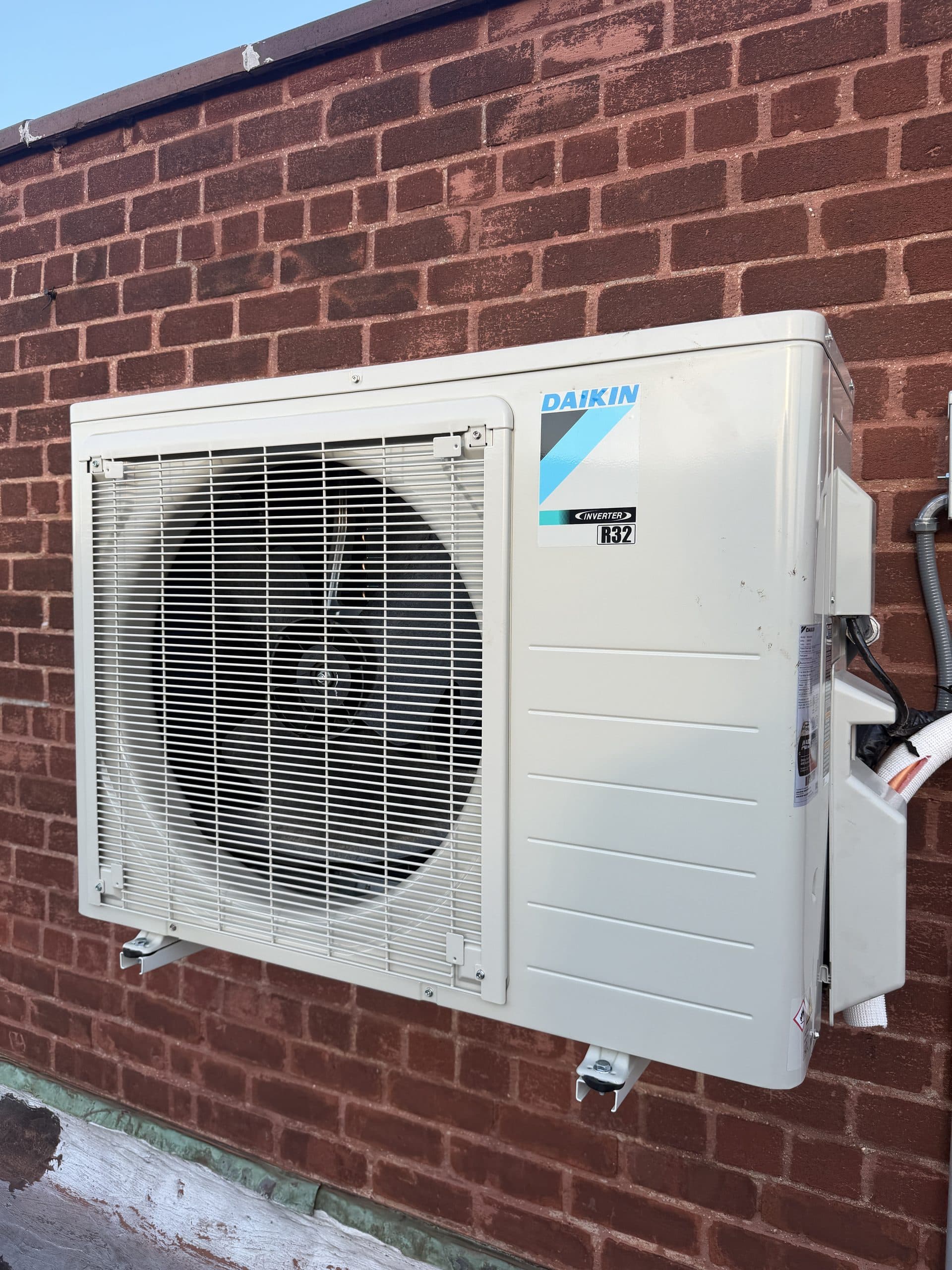
Boiler-to-heat-pump conversionThree-story brownstone with one-pipe steam boiler decommissioned. Mitsubishi Hyper-Heat M-Series multi-zone ductless, two heads per floor, condenser in rear yard. 100A electrical service upgrade. Clean Heat Option 1 rebate filed as part of the install. Adds central cooling on every floor, which the boiler never provided. Project span: 6 weeks (proposal to commissioned install).
- 02
Pre-war co-op, Upper West Side
Window AC and PTAC replacement12-unit prewar co-op replacing 1980s PTAC and window AC across common-area corridors. Mitsubishi M-Series wall heads in each apartment, centralized condensers on roof. Alteration agreements produced for the co-op board, COIs with the building listed as additional insured. Project span: 14 weeks across phased apartment access.
- 03
Class A office, Midtown
Full VRF replacementFloor 12 through 18 of a Class A office tower. Daikin VRV Aurora replacing 2007 chiller-and-AHU plant. Heat recovery enabled so perimeter zones can heat while interior zones cool on the same loop. iTM building management interface integrated with existing BMS. Local Law 97 emissions modeling completed for the building's annual report. Project span: 11 weeks per floor, staged after-hours to minimize tenant disruption.
- 04
Restaurant, Lower East Side
RTU heat pump replacement plus kitchen exhaustFailed gas-fired RTU replaced with electric heat pump packaged rooftop. Dedicated kitchen exhaust hood, ducted grease run to roof penetration with FDNY-approved fire damper, dedicated makeup-air system. Department of Health coordination on grease ductwork. Phased Load Electrification Clean Heat rate ($70 per MMBtu) on the kitchen line. Project span: 4 weeks, including after-hours work to maintain operations.
- 05
Boutique hotel, Tribeca
City Multi VRF guest-room retrofitGuest-room cooling and heating retrofit across 6 floors, 42 keys. Mitsubishi City Multi VRF with M-Series indoor heads in each guest room, central condensers on roof. Replaces failing through-wall PTAC. Coordinated controls with the hotel's existing PMS so each room sets to occupied/unoccupied profile. Project span: 16 weeks, two floors at a time to maintain occupancy.
- 06
Multifamily, Bed-Stuy
Full-load ASHP with decommissioning24-unit pre-war multifamily converting from oil-fired boiler to building-wide air-source heat pump. Mitsubishi Hyper-Heat M-Series, individual condensers per unit on the roof, oil boiler decommissioned. Clean Heat multifamily prescriptive rate at $5,000 per dwelling unit ($120,000 total). Project span: 22 weeks, phased per stack.
- 07
Hotel chiller plant, Midtown West
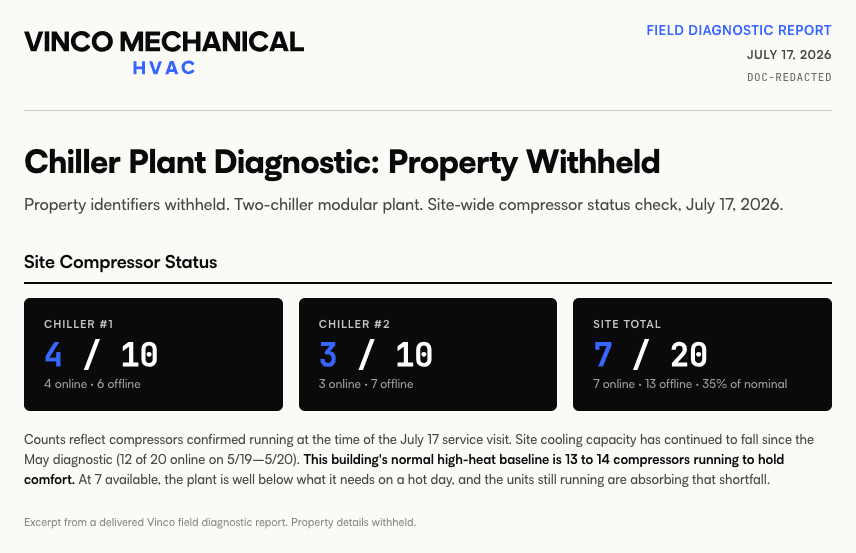
Two diagnostics, one season. In May, 12 of 20 compressors online; by July, 7 of 20, after flagged repairs went undone and a second heat exchanger ruptured. Bank-by-bank findings, and a report that leads with the number the owner needs: compressors online against what the building requires. The full story is on the hotel HVAC page.
- 08
Cooling tower, midtown Manhattan hotel
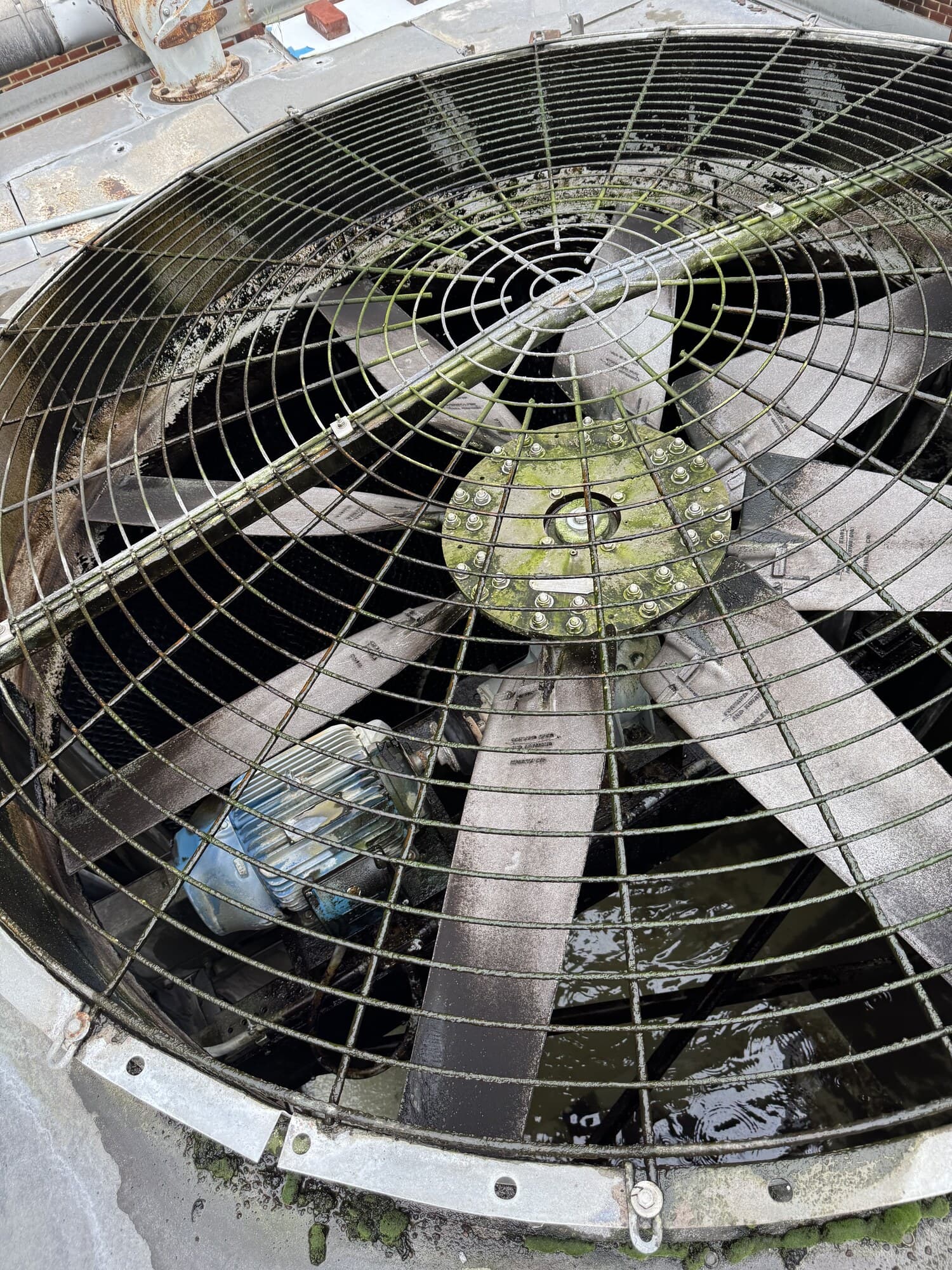
A gearbox fan assembly on a Marley/SPX 300-ton cooling tower, the heat-rejection loop for two 150-ton Arctic Chill water-cooled chillers below, showed heavy corrosion 30 days after we replaced it. The part was fine; the water condition was the problem. Monthly maintenance caught it at 30 days instead of at failure, and the finding drove a water-treatment review alongside the mechanical work.
- 09
Boutique hotel, SoHo
Emergency exhaust diagnostic to building recovery planA Saturday smoke backup in the hotel kitchen brought the fire department out. Our tech opened the CaptiveAire exhaust and makeup-air control panel and found a temperature controller reading open-sensor, wiring burned at the terminals, and a cardboard box wedged into the live panel by a prior party to hold the failing controller in place. Drive belts shredded, coils fouled, roughly two years of deferred maintenance. The building's smoke-purge unit was also down. We photographed everything, produced a photo-documented diagnostic report that weekend, and priced the repair scope: chemical cleaning, new belts and filters, controller and contactor replacement, rewiring, and commissioning. The report led to a full-building walkthrough with ownership's engineer and a phased recovery plan, approved by ownership, that puts life-safety systems first: toilet exhaust, the smoke-purge return fan, then the water-source heat pump fleet and the cooling tower, with repair-versus-replace economics that price in Local Law 77 compliance.
Why client names are not published here.
Co-op boards, condo associations, hotel chains, and commercial property managers generally do not authorize their building name on a contractor's marketing materials. Many lease agreements and co-op alteration agreements expressly prohibit it. The DBA-only naming convention (building type, neighborhood, scope, equipment) preserves the case study detail while respecting the client relationship.
Named references are available on request to sales prospects, with the client's consent. A prospective customer can email admin@vincomechanical.com with their building type and scope question; Vinco will reach out to past clients with similar projects to ask for a direct reference, contingent on their approval.
Right to remove: if a past client believes a project reference on this site identifies them, email admin@vincomechanical.com and Vinco will remove it within 3 business days.